
Cloud Accounting Software for Singapore SMEs
A platform can look polished and still fall short the moment you need GST reporting that matches IRAS expectations, an InvoiceNow connection, or accounts that export cleanly toward ACRA. We write about cloud accounting software the way a Singapore finance team evaluates it: what it handles locally, what it costs you in setup time, and whether the vendor will still answer the phone next year.
- Registered office
- 71 Robinson Road, #14-01, Singapore 068895
- Talk to us
- +65 6271 8509
Monday to Friday, 9:00 AM – 6:00 PM (SGT) - Written enquiries
- [email protected]
What Singapore buyers actually need to check
The first filter is local compliance, not feature count. A tool that cannot produce a GST F5-ready report, or that treats Singapore as a minor regional variant, will cost you hours every quarter. Everything else, from dashboards to mobile apps, is secondary until those are settled.
Read the compliance guide-
Does it handle 9% GST correctly?
Output tax and input tax should be tracked as transactions are entered, so the F5 figure is a review rather than a reconstruction. Ask the vendor to show you a GST report built from a real quarter of Singapore transactions.
-
Does it connect to InvoiceNow?
Readiness means your software generates and transmits InvoiceNow documents, receives them from suppliers, and keeps those records in the same ledger you report from — not a badge on a pricing page.
-
Can it export what ACRA needs?
Most Singapore companies file financial statements in XBRL through BizFile+. Confirm whether the platform groups the figures your filing agent maps, or hands you a report and leaves the mapping to you.
Software does not file for you. It decides whether filing week is calm or chaotic.
IRAS myTax Portal remains the filing destination, whatever platform you choose. What cloud accounting changes is the preparation: records that reconcile, reports that match the portal's expectations, and an audit trail if questions arrive later.

GST reporting without the quarterly scramble
GST reporting is where cloud accounting earns its keep. Instead of reconstructing a quarter from spreadsheets, a properly configured system tracks output tax and input tax as transactions are entered. You still review the numbers, but the reconciliation work shrinks.
For businesses below the threshold
Even if you are not registered yet, a configured ledger shows your taxable turnover month by month. You see the registration threshold approaching instead of discovering it after the fact, and you can plan the transition rather than react to it.
For registered businesses
The quarterly F5 becomes a review of figures the system already grouped. Fewer hours spent matching invoices to returns, and a clearer trail if IRAS asks how a number was derived. Your accountant spends the time on judgement, not on cleanup.
E-invoicing in practice
InvoiceNow readiness in practice

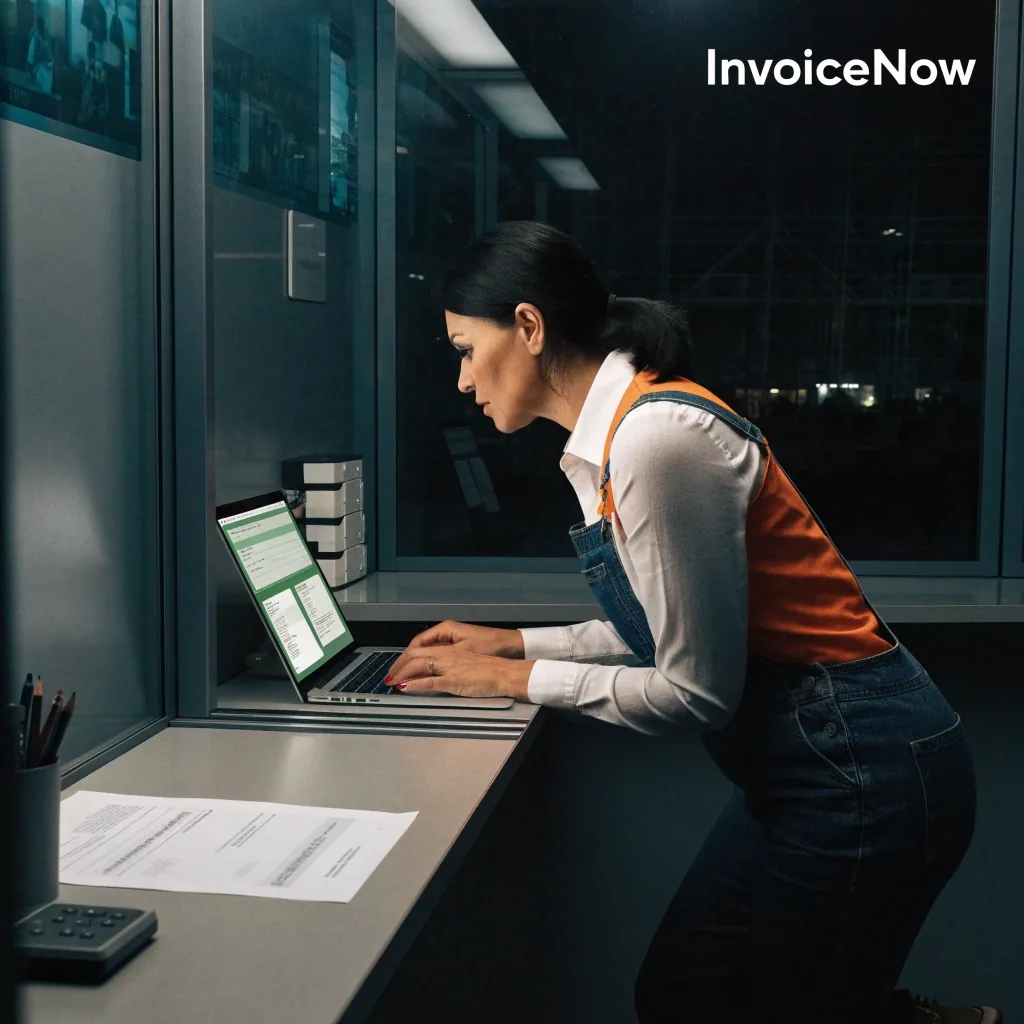
Singapore's e-invoicing network changes how invoices move between businesses. Readiness is not a logo on a pricing page. It means your software can generate and transmit InvoiceNow documents, receive them from suppliers, and keep the resulting records in the same ledger you report from.
If a vendor markets InvoiceNow support, ask which transmission method they use, whether incoming invoices land in your accounts payable automatically, and what happens when a supplier sends a document the system cannot read. Those three answers tell you more than any comparison table.
- Send
- Invoices leave your system as InvoiceNow documents rather than PDFs attached to email.
- Receive
- Supplier documents arrive in accounts payable, ready to match against a purchase order.
- Record
- The same ledger you report from holds both directions, so nothing lives in a separate inbox.
XBRL and the ACRA filing path
Most Singapore companies file financial statements with ACRA in XBRL format. The question is who does the tagging. Some accounting platforms prepare the data and let your filing agent finish; others hand you a report and leave the mapping to you. Either can work.
Software prepares, agent files
Common among SMEs whose accountant already handles ACRA submissions. You need the platform to group revenue, cost of sales and operating expenses in a way the agent can map without asking you to re-key anything.
Software tags, you review
Suits companies filing without an external agent, or finance teams that want the mapping done inside the ledger. Check which taxonomy version the platform supports and how it handles comparatives from the prior year.
The gap to avoid
Discovering two weeks before your filing deadline that your accountant needs figures the software has never grouped that way. Ask about the XBRL path during the trial, while switching is still cheap.
Bank reconciliation and the daily close
Bank reconciliation is the habit that keeps everything else honest. Feeds from major Singapore banks let you match transactions against invoices and expenses as they clear, so the ledger stays close to reality.
A monthly close that takes two days usually means reconciliation was left to the end. A close that takes two hours usually means someone reconciled as they went. The software choice matters less than whether the feed works reliably with the accounts you actually hold.
Multi-currency, receivables, and payables
If you invoice overseas customers or pay suppliers in USD, MYR, or CNY, multi-currency handling stops being a nice-to-have. You need historical rates applied at transaction date, realized and unrealized gain or loss tracked correctly, and reports that separate currency exposure from ordinary profit.
Rates at transaction date
Historical rates applied when the invoice or bill is raised, not recalculated later when the report is run. That distinction is what makes the gain or loss figure defensible.
Ageing in the billed currency
Receivables and payables should age in the currency they were billed in, not only in SGD. Otherwise a slow-paying overseas customer looks different from the exposure you actually carry.
Exposure kept separate
Reports that separate currency movement from trading profit. Useful when a parent company or a bank wants to see operating performance without exchange noise.
The chart of accounts is the real setup decision
A chart of accounts copied from a template will work until it doesn't. The structure you choose shapes every report afterward, so it is worth an afternoon with your accountant before you import anything.
Map your revenue lines to how you actually sell, keep expense categories narrow enough to be useful, and decide early how you will separate cost of sales from operating costs. Changing this later is possible. It is just tedious — and every month you delay, the migration gets bigger.
One practical test before you commit: ask the vendor to walk you through setting up a chart of accounts for a business like yours. If the answer is a generic template and a video, that tells you what implementation support will feel like at month end.
Payroll, inventory, and the modules question
Not every SME needs payroll and inventory inside the accounting system, but the ones that do tend to feel it quickly. A modular platform such as Odoo lets you start with accounting and add sales, inventory, or manufacturing as you grow. A focused accounting product such as Financio keeps things simpler and adds payroll where it makes sense.
The right answer depends on whether your operational complexity is growing or stable. A trading company with stock to track is solving a different problem from a consultancy that invoices for time. Test the modules you need together during a trial, not one at a time.
Questions worth asking a vendor
- Does adding a module change how my existing reports behave?
- Is payroll updated for Singapore CPF and levy changes, and by whom?
- Can inventory valuation flow into cost of sales without manual journals?
- What is included in the subscription, and what is charged separately?
Comparing local and global platforms
Singapore-native products such as Financio and Info-Tech Accounting tend to lead with local tax handling and support specialists. Global platforms such as Xero, QuickBooks Online, and Zoho Books lead with integrations and ecosystem. Neither camp wins by default.
A five-person consultancy and a thirty-person trading company will weigh the same comparison very differently. Where they agree is on the checklist: GST handling, InvoiceNow, XBRL output, bank feeds, and who picks up the phone in March.
Compare cloud accounting platformsLocal platforms
Financio, Info-Tech Accounting. Strong on Singapore tax rules and local support hours. Fewer third-party integrations.
Global platforms
Xero, QuickBooks Online, Zoho Books. Wide integration ecosystem and a large partner network here. Confirm local filing details.
Modular suites
Odoo and similar. One system for accounting, sales and stock, with more setup work up front. Best when operations are growing.
Multi-entity finance
Light and comparable platforms for groups holding Singapore entities alongside overseas operations, with consolidation and SFRS reporting.
Buying software through a local partner
Plenty of Singapore SMEs buy Xero or a similar platform through a service firm that handles implementation. Packages listed on the SMEs Go Digital portal, such as the Wealthbridge Corporate Services Xero solution or the Aggregate Cloud Accounting Software offering, bundle the software with setup and ongoing support.
That model suits businesses without an in-house finance lead. It also means the partner's quality matters as much as the software's — a bundled package is only as good as the person who configures your chart of accounts and answers in March.
See implementation and supportVendor credibility before you commit
Ask for the vendor's corporate registration details and check them. Ask who supports Singapore customers, during which hours, and whether support is local or routed overseas.
Look for evidence the product is actively maintained for Singapore rules, since tax rates and filing formats change. A vendor that cannot answer these plainly is telling you something.
Check vendor credibility
Cross-border and multi-entity setups
Businesses holding Singapore entities alongside operations elsewhere face a different problem: consolidation. Platforms such as Light position themselves for multi-entity finance work, with SFRS reporting, 9% GST, InvoiceNow, and bank connectivity on the Singapore side.
If you report to a parent company abroad, check how the software handles intercompany transactions before you sign anything. Ask to see a consolidation run with a real intercompany elimination, not a demo dataset built for the sales call.
Questions Singapore finance teams ask
Short answers to the five things that come up most when SMEs shortlist accounting software here. If your situation is unusual, send us the details and we will point you at the right page.
Which cloud accounting software is best for Singapore GST and ACRA filings?
There is no single answer, because it depends on your entity type and who prepares your filings. What matters is that the software handles 9% GST correctly, produces reports your accountant can use, and supports XBRL export for ACRA. Our comparison page sets out the criteria we use.
Does the software need to support InvoiceNow and XBRL?
If you trade business-to-business in Singapore, InvoiceNow readiness is increasingly expected. XBRL matters if you file financial statements with ACRA, which most Singapore companies do. Confirm both with the vendor directly rather than relying on a feature badge.
Can cloud accounting handle payroll, inventory, and multi-currency?
Often, yes, but usually through separate modules or add-ons. Multi-currency is core to most platforms. Payroll and inventory vary widely. If you need all three, test them together during a trial rather than assuming they integrate smoothly.
How do Xero, QuickBooks Online, and Zoho Books compare for Singapore SMEs?
All three are widely used here. Xero has a strong local partner network, QuickBooks Online is common among smaller businesses, and Zoho Books appeals to companies already using Zoho tools. Local fit depends on your accountant's familiarity and your integration needs.
Is the vendor registered in Singapore and easy to contact?
That is a fair question to ask any vendor. Request corporate registration details, a local support number, and a contact form that reaches a person. We cover how to check these on our vendor credibility page.
Registered in Singapore, supported from Singapore
Iskophel Cloud Accounting publishes this guide and answers questions about cloud accounting software for Singapore businesses. We are registered and contactable at the details below during business hours.
- Corporate registration details
- Iskophel Cloud Accounting
71 Robinson Road, #14-01, Singapore 068895 - Business phone
- +65 6271 8509
- Email and hours
- [email protected]
Monday to Friday, 9:00 AM – 6:00 PM (SGT)
Send us your question
Tell us your entity type, which platform you are considering, and what you need it to handle locally. We will reply with the pages that fit your situation, or a direct answer if the question is short.

Start with the pages that answer your question
Compare platforms side by side, walk through Singapore compliance requirements, or check how to evaluate a vendor before you sign. If none of them covers your case, the form above reaches a person during business hours.